
Borewell Drilling
Home / Borewell Drilling
Borewell Drilling Methods
Surface Drilling
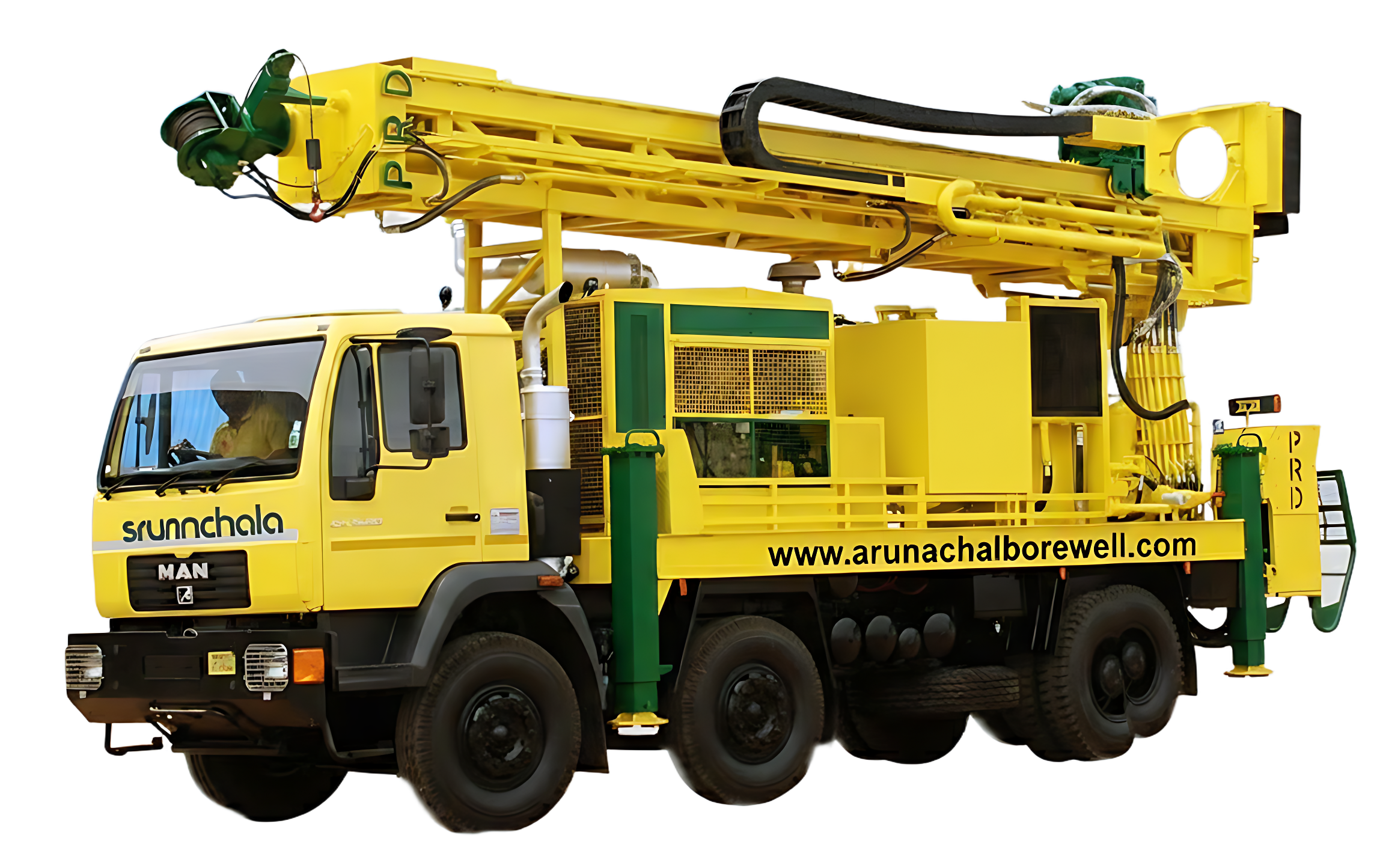
Surface drilling is adopted in locations where the drilling area is open and allows enough space for the rig to operate. Different drilling bit diameters are selected based on the purpose of the borewell. Modern high-power hydraulic rigs can drill borewells up to 1200 feet deep with accuracy and efficiency.
Drilling Diameter Options
- Domestic / Home Use: 4.75", 6", 6.5"
- Agricultural Use: 6.5", 8", 10", 12"
- Industrial Use: 6.5", 8", 10", 12"
Borewell Drilling Procedure
Below is the general procedure for drilling a 6.5 inch borewell. Steps remain similar for other diameters.
- Locating the Point: A groundwater expert or hydro-geologist identifies the ideal drilling location to ensure maximum water yield.
- Rig Positioning: The rig is placed exactly over the marked point. An 8-inch bit and hydraulic hammer are used to drill until reaching hard rock formation.
- Casing Installation: On reaching rock, MS/PVC casing pipes (usually 7") are placed to prevent soil collapse.
- Rock Drilling: A 6.5-inch bit is used to drill through rock. Drilling rods (20 ft each) are added as depth increases.
- Managing Silt / Boulders: If silt or boulders appear, slotted pipes or screen pipes are installed.
- Water Detection: When water is struck, flow becomes visible and the yield is estimated. Drilling continues if needed.
Important Notes & Issues
- Avoid septic tanks or waste pits near borewells to prevent contamination.
- Borewells must be cleaned every 2 years to prevent blockage.
- Never use gelatin/explosives inside the borewell — it may cause collapse.
- Slotted casings are mandatory in silt or boulder formations to avoid pump issues.
